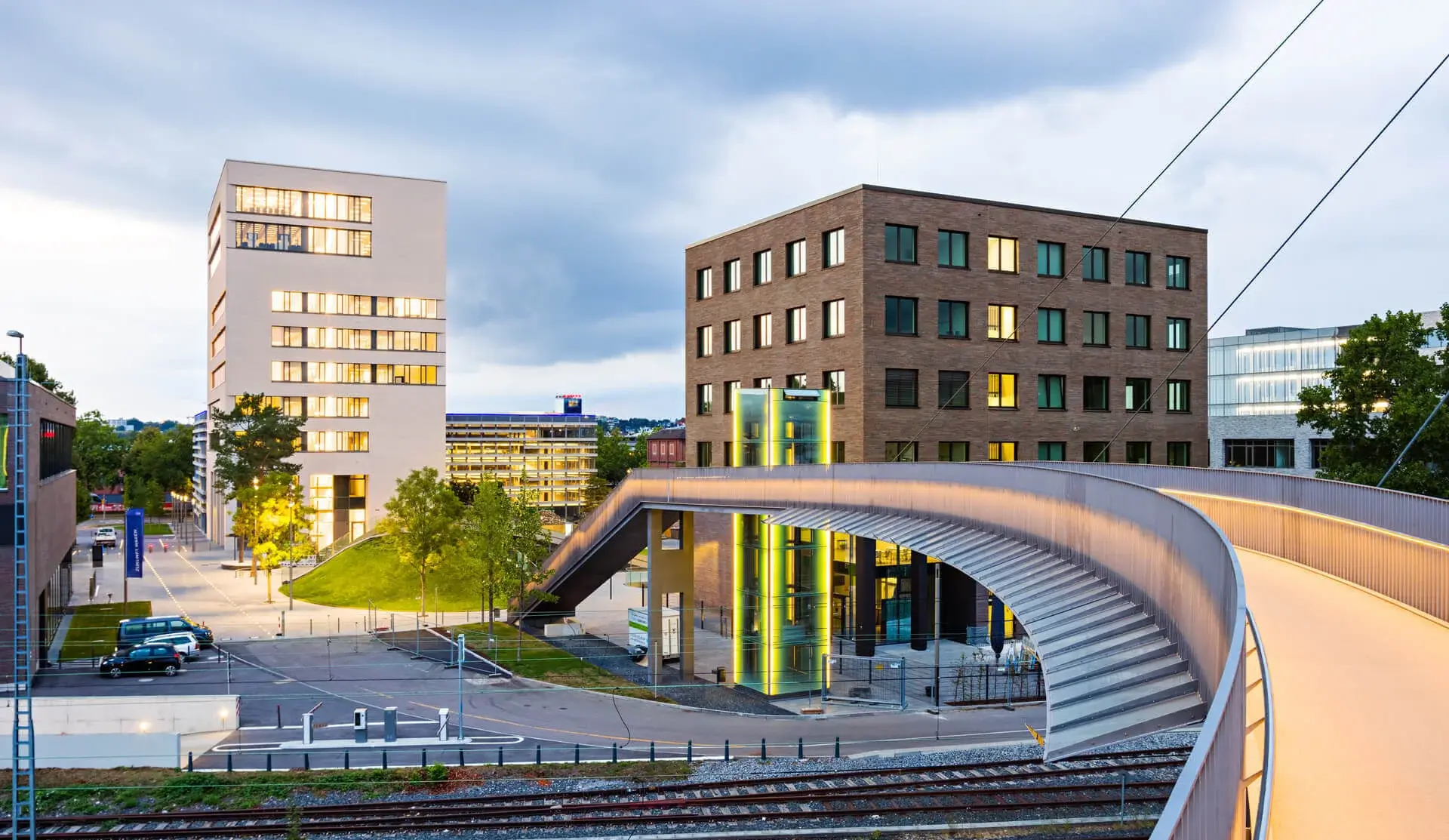
The TUM Heilbronn Data Science Center (HDSC) is an interdisciplinary research center where management, data, and artificial intelligence converge. At its core lies a shared ambition: to develop knowledge that strives for scientific excellence and solutions with real-world impact for industry, public institutions, and society at large. Jointly rooted in TUM's School of Computation, Information and Technology and TUM's School of Management, and founded by the Dieter Schwarz Foundation, the HDSC is built on the belief that data science, at its best, has the power to become a reliable foundation for better decisions in boardrooms, in public institutions, and across everyday life.
Research at the HDSC is built on two core pillars. The first is the development of cutting-edge data science methods, advancing the foundations of AI, optimization, and empirical analysis to expand the boundaries of what data-driven research can achieve. The second is the interdisciplinary application of these methods to real-world challenges in domains ranging from manufacturing and healthcare to marketing, policy, and beyond. Together, these two pillars define the vision of the HDSC: data science that pushes methodological boundaries while remaining accountable, human-centered, and impactful for the challenges that matter most to us all.
Six professors from each school form the scientific core of the Center. With a strong focus on the development of new methods, models, and algorithms. This foundational research is complemented by application-oriented projects to deliver actionable insights and real-world solutions.
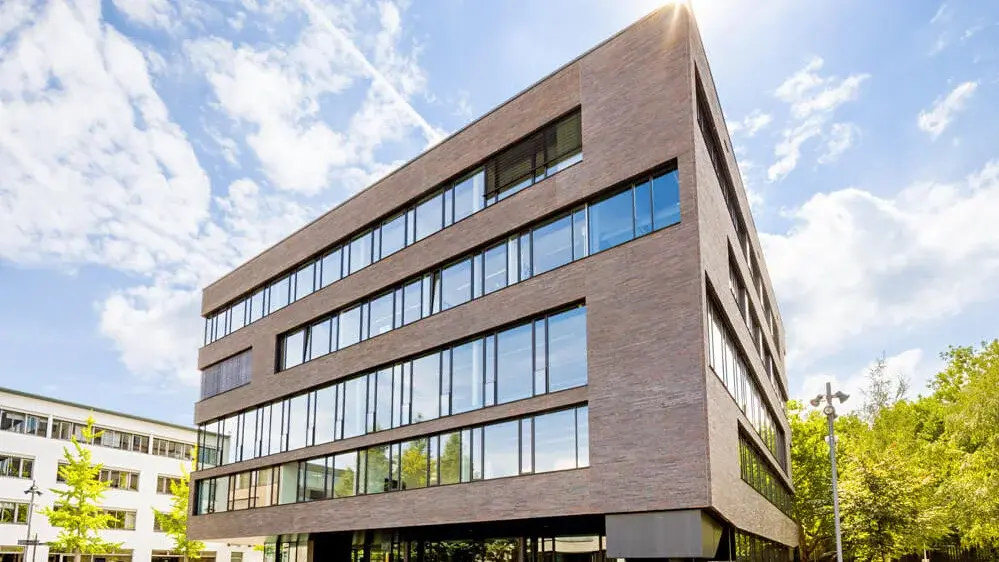
Mission of the Center
- Connect expertise from management and computation to foster an inspiring environment for foundational and applied data science research.
- Enable innovation and transfer of cutting-edge data science methods from HDSC to academia, industry, and society.
- Deliver immersive and English-taught programs to educate and empower the next generation of AI innovators and data scientists.
- Promote active exchange and collaboration on data-driven topics among researchers, industry leaders, policymakers, and the public – locally and beyond.
Rigorous, responsible, and impactful data science — for industry, institutions, and society
Where Methods Meet Impact
Data Science Methods
AI & Software Engineering
LLM systems; automated testing; AI deployment & security; collaborative distributed ML
Spatiotemporal Machine Learning
Time series; tensor decomposition
Data-Driven Optimization
Operations research; quantitative decision support
Causal Inference & Econometrics
Causal ML; empirical economics; evidence-based analysis
Impact at the Core
Responsible & Trustworthy AI
Fair, accountable, secure, privacy-preserving
Human-Centered by Design
Built for people
Scientific Excellence
Rigorous, reproducible

Applications & Domains
Manufacturing & Operations
Production planning, supply chain, Industry 4.0
Marketing & Consumer Behavior
Personalization, consumer analytics, digital co-creation
Smart Cities & Mobility
Urban systems, transport networks, sustainability
Digital Health & Healthcare IT
Health data management, gamified health information systems
Innovation & Technology Management
AI-driven strategy, technology adoption, firm performance
Information Systems & Security
Decentralization, cloud, data sovereignty, cryptoeconomic systems
Interdisciplinary Excellence | Collaborative Innovation | Research to Impact | Responsible Data Science | Shaping the Future
Our Professors
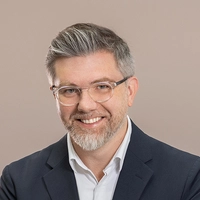
Prof. Dr. Ali Sunyaev
Information Infrastructures
Heilbronn Data Science Center
(Center Director)

Prof. Dr. Christine Eckert
Marketing Analytics
Heilbronn Data Science Center
(Deputy Center Director)

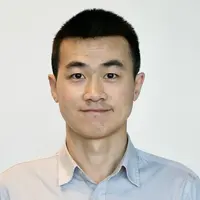
Prof. Dr. Chunyang Chen
Software Engineering & AI
Heilbronn Data Science Center


Prof. Dr. Paul Hünermund
Empirical Economics and Data Science
Heilbronn Data Science Center
HDSC Tandem Projects
The HDSC Tandem Projects bring together researchers from Computer Science, Data Science, Management, and Economics to jointly address innovative research questions at the intersection of their disciplines. Through this interdisciplinary collaboration, the projects foster new perspectives on current scientific and societal challenges while leveraging the synergies between data-driven methods and management research.
By combining complementary expertise, the projects promote knowledge exchange across disciplines and lay the foundation for forward-looking research with both academic and practical relevance. At the same time, they generate valuable insights and innovative solutions that can benefit researchers, businesses, policymakers, and other stakeholders alike.
The individual Tandem Projects are presented below:
Prof. Dr. Jingui Xie
Learning and Dynamics in Stochastic Multi-Agent Systems
“This interdisciplinary project investigates how learning agents interact and adapt in complex stochastic systems, combining perspectives from data science, artificial intelligence, operations research, and management. The resulting models and algorithms will help organizations design more effective policies and data-driven decision-support tools in areas such as healthcare, service systems, and platform-based economies, where dynamic strategic interactions and uncertainty play a central role.”
Prof. Dr. Luise Pufahl
Sustainability-aware Event Data Engineering for Global Logistics
„Our project develops the first holistic framework for Sustainability-aware Event Data Engineering to measure and optimize the environmental footprint of global logistics processes. By merging the expertise of TUM’s Heilbronn (HDSC) and Munich (MDSI) data science hubs, we integrate ERP event logs with IoT, geospatial, and environmental data to enable high-performance, predictive process analytics.”
Prof. Dr. Ali Sunyaev
Multi-Omics Integration for Understanding the Biology of Rejuvenation and Enabling Interpretable, Trustworthy AI-Driven Interventions
„TRAIS (Traceable Rejuvenation Analytics & Implications for Society) draws on complex biological data and AI to investigate the foundations of aging and rejuvenation, which can already be measured and influenced, yet remain barely understood in how their underlying processes interact. At the same time, the interdisciplinary project studies trust in and societal acceptance of such technologies, as a basis for better understanding the human body and bringing these technologies responsibly into practice.“
Contact
Heilbronn Data Science Center
Bildungscampus 2
74076 Heilbronn
hdsc(at)tum.de